CUSTOMER RESOURCES
The Candidate's Experience with a Background Check and Hiring
When applying for a job, what will a candidate experience? From the background check and beyond, we review the process from start to finish.

Many employers may view the hiring process simply as a tool or a pipeline to bring talent into their business. Attract applications, vet candidates, make selections, hire them and slot them into an existing team. However, it is vital not to take a one-sided view of the process—hiring is about more than attracting assets to support a company's functioning. It is also about achieving buy-in from applicants throughout the process. It is essential to focus on the candidate experience, from how you background check them to how you run interviews.
A good candidate experience can create a motivated team member eager to demonstrate that you made the right call. An unpleasant experience can mean offers left on the table and an inability to attract or retain talent. For a small business, the quality of the workforce and its importance are amplified. Every person counts.
That doesn't mean the way forward isn't immediately apparent. Instead, we need to take a step back and evaluate the entire process. What is an applicant's journey? As we answer that question, compare your own processes and imagine what a job-seeker experiences with your employment process. Think about reshaping your process to empower and excite those who will be the best fit on your teams.
What Creates a Positive Candidate Experience?
Before we break down each stage of the candidate experience in recruitment and hiring processes, what should every SMB strive to achieve? You can take action at each stage, but there is also a holistic approach to consider. The following are key factors and feelings that should be present throughout the entire process, not only at any one stage.
Developing a better hiring process and a work environment based on your brand and its values should involve the following core components.
Demonstrate interest and engagement with every applicant. Foster a warm, inviting atmosphere founded on your values and centered on your mission. Remember that applicants evaluate you just like you assess them.
Personalize experiences wherever possible. Don't be a faceless business with opaque processes disconnected from human experiences. Applicants don't want to be just another number. SMBs have unique opportunities to build teams by fostering a personal connection.
Reduce friction from as many places in the process as possible. Don't make completing applications complicated, frustrating, or annoying. Test the systems yourself and imagine a job-seeker in your position.
Be communicative. The more engaged you are in exploring a candidate's employment history, the more they feel seen. That can make a difference to successful job offer levels in competitive industries and roles. Don't cease communications and disappear.
Be transparent. From pay scales to the types of background checks you use, help applicants establish clear expectations.
Be prompt. Job-seekers don't want their time wasted any more than you do. Communicate clearly about timelines around their pre-employment background check.
Be kind when you decline. When disqualifying an applicant due to a background check result, satisfy your legal obligations. Let applicants know when you've decided not to proceed with the process.
Let's investigate how Human Resources or a hiring manager can apply these principles across the process to create a better candidate experience.
The Job Applicant's Journey, Step by Step
Individuals seeking jobs will have a range of experiences throughout the hiring and onboarding process. Many people submit multiple applications to different businesses simultaneously, and some may even continue applying to other jobs throughout the process. Differentiating your business fosters a great candidate experience, which can make an impact further along in the process.
Not every job offer you extend guarantees acceptance. Crafting an improved experience can help you stand out from the competition. For SMBs, that's one key to developing a team that can call attention to your brand. It all starts with the job posting.
Discovering and Recognizing Job Opportunities
A well-crafted job listing and an informative, well-made business website help job seekers notice SMBs in crowded job markets. Researching your business and breaking down the details of your job posts are among the first things a candidate experiences. Avoid dryly written listings that only offer bare facts and no sense of your brand, its voice, or your mission. Tell a story with your postings. Make it a story the suitable applicants will want to involve themselves with.
Job-seekers will often research your business more directly. Tailor your web presence with this in mind, at least in part. Be engaged and visible on social media to promote your business's best aspects. Spotlight any charitable efforts or community engagement programs you organize. When possible, feature stories or testimonials from current or past employees.
When qualified applicants feel optimistic about your business because of their experience during the research stage, they're more likely to move to the next step. Don't expect the right individuals to appear; make an effort to invite their interest.
Completing and Submitting Initial Applications
There's no shortage of stories online from job seekers who have truly appalling experiences with the application process. From TikTok to Reddit and across social media, tales of woe abound – clunky software, systems that demand repeatedly inputting the same resume data, and personality tests that waste hours of time. A lousy application experience is a fast track to souring applicants about your company and its capacity to be a good employer.
Reduce the number of steps to complete an application for your job. Follow modern best practices rather than discredited selection methods. Use applications that users can complete on their chosen platform, including mobile devices. Be clear about expectations and empower individuals to complete applications with ease.
A smooth application process creates a positive impression. The experience at this stage can set the tone for the remainder of your interactions. Better back-end solutions, such as applicant tracking systems, help you stay on top of the process to create improved experiences.
Waiting for Evaluation and Initial Candidate Selection
How your business works once it receives applications is vital. For an applicant, this is one of the least transparent parts of the process. It often requires waiting and hoping for communication from the business. Of course, you must review application data, examine resumes, and ultimately select the individuals you'd like to interview. Selecting the most promising individuals is important—but you shouldn't keep applicants in the dark. Likewise, you shouldn't keep them waiting a long time, either.
A better experience involves immediate personalized communication upon receipt of the application. This communication can establish expectations and elaborate on when applicants can expect more information. If you decide not to select a candidate for an interview, kindly let them know. Continue using personalization in communications with those moving on to the next stage.
Connecting With the Business: Interviews and More
Job interviews still have a valuable place in the application process. They are an employer's chance to ask specific questions and gauge someone's suitability with the organization. Likewise, applicants often see the interview as their chance to judge the company. A frustrating candidate experience with the interview process can leave them disinclined to accept a job offer.
There are many things businesses can do to improve outcomes in this area without sacrificing valuable information. Some of those actions include:
Employ skills tests or practical assessments as interview components. Tailor any practical assessments you use so they are not labor or time-intensive.
Give applicants a chance to prove themselves or demonstrate their passion. When asking questions, avoid cliches, such as " What is your biggest weakness?” Engage applicants in conversation about real on-the-job challenges and assess how they might respond to a hurdle.
Invite the applicant to learn more about the business, such as providing a tour through the building or conversing with an existing employee. Provide more information about your culture. Create a sense of the environment the individual will experience working in the business.
Communicate promptly before and after the interview. Offer flexible options, such as remote video interviews.
Just as the candidates do, put your best foot forward during the interview process and make the experience positive. Now, you'll need to decide who moves forward. Politely and personally notify those you won't move forward and conclude the process.
The Background Check Process
For many employers, the background check process begins after the job interview cycle identifies the most qualified and well-suited individuals. Beware of any ban the box or Fair Chance laws in your state or local area. These rules may demand that you postpone background checks until making a conditional job offer. Understand any other regulatory requirements, such as when the law requires you to check an applicant's driving record for DOT-regulated jobs.
Under the Fair Credit Reporting Act, you must obey several directives when conducting background checks. First and foremost is obtaining an applicant's informed consent. You must provide a standalone disclosure of your intent to use background checks for employment. This disclosure informs applicants about the process. A statement of their rights under the FCRA is also key. After providing such documents, you can get an applicant's signed consent to the check—you can't proceed without it.
Even for applicants with clean records, going through different background checks often proves nerve-wracking—especially since it means more waiting on answers. You can help calm nervous candidates by providing clarity and insight into the process. Offer clear timelines related to your consideration process. Obtain and evaluate detailed reports as quickly as possible. Keep individuals informed about the status of your evaluation from stage to stage.
Receiving and Considering the Job Offer
Now comes the time to make the job offer. If you decide not to offer someone a position (or to rescind an offer) because of a background check result, you have compliance matters to consider. Disqualifying candidates because of information in their report falls into the category of adverse actions.
The FCRA mandates that you send a pre-adverse action letter detailing your intent. You must give the candidate time to respond and dispute your findings. Be patient and understanding if a dispute does arise. Otherwise, you may send a final adverse action notice and conclude the process. Consider wishing candidates well in your final communications.
Now comes the time to celebrate with those you've chosen to hire. When you craft offers, be competitive. Build benefits packages that can make a real difference for employees. Focus on tangible things like health insurance and better wages rather than in-office creature comforts. SMBs can define themselves differently from the competition by building offers that clarify that the company cares about looking after its employees.
Be sure to draw attention to all your unique value propositions for employees. Such UVPs could be remote or hybrid work opportunities that help reduce commuting. A variable schedule that's flexible for parents or young professionals is often an attractive feature.
Be as excited to bring a new worker on board as the individuals will be about receiving excellent job offers. Spotlight that joining the team is an exciting opportunity. When a job candidate accepts, you have one last duty in the hiring process: creating a seamless onboarding process that affirms the experience you've crafted from the start.
Engaging With Onboarding
Make onboarding simple, from completing I-9 forms to undergoing orientation and learning about company policies. Use the onboarding process to educate newcomers about all the opportunities they can access in the business. If you run any internal training programs or career development opportunities, highlight them. Make their accessibility a selling point. Showcase examples of internal promotions and how other employees in your SMB have moved up over time.
If you've done everything right, this process will result in a talented and motivated new employee ready to contribute to everyone's success. Considering the applicant's journey, the importance of the candidate's experience is self-evident.
The Impact of Background Check Processes on Candidate Experiences
Let's take a step back to zero on one particular aspect of the process described above: the screening stage.
This moment is critical for employers, especially in ban the box jurisdictions. A criminal background check may reveal disappointing and potentially disqualifying information. Reference or verification checks might showcase problems you didn't anticipate during the interview. You may change your mind based on these check results.
All this takes place while applicants wait nervously to hear back from you. Many companies don't provide any transparency or insight into this process. Leaving applicants in the dark is an upsetting experience. Beginning from a place of openness is critical. So, too, is working around the risks you face.
FCRA non-compliance is the biggest of those risks. Remember, you must obtain informed consent from applicants. That requires particular paperwork with meticulously defined language. Including disclosures with the wrong paperwork has been the root cause of lost lawsuits for many businesses. You must review your obligations carefully to create a good experience for individuals submitting to background screening.
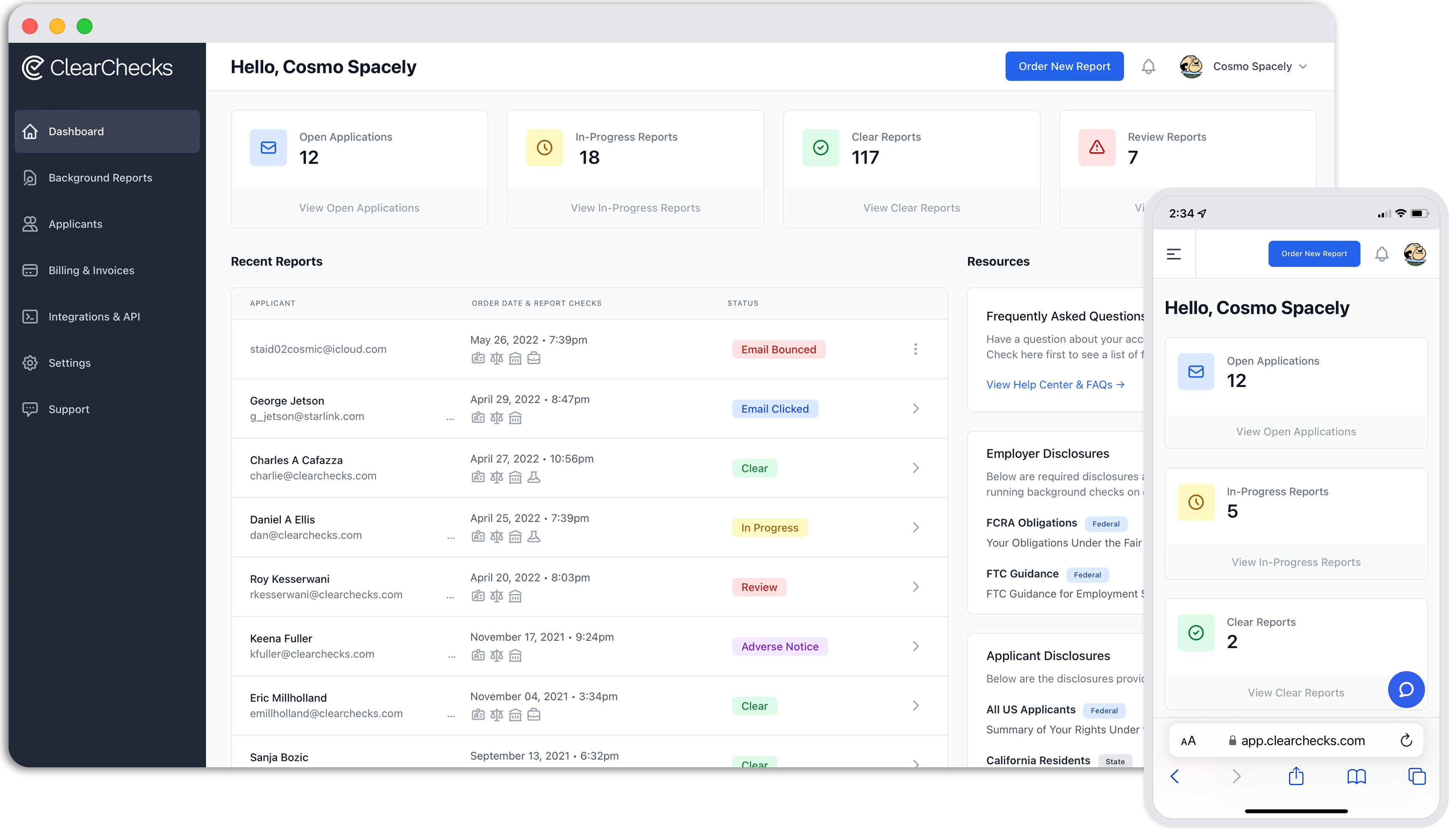
Provide applicants with a general time frame for when they can expect a background check result. Some online websites and other utilities let users see the status of the process. Displaying the various stages, from “submitted” to “report obtained” and “evaluating,” can help applicants understand how much longer they need to wait. When you decide, move on to the following steps: communicating an offer or sending a pre-adverse action notice.
Build Better Experiences and Hire the Right People Today
It's easy for employers to get tunnel vision when dealing with the hiring process. When you refocus your efforts beyond your own needs to create a positive candidate experience, everyone benefits. You can attract more talented job applicants and onboard individuals excited and motivated to work for you. Doing so requires effort, though, especially in areas such as applications, interviews, and background checks.
Reduce friction as much as possible in the recruitment process. Prioritize positive interactions and fast turnaround times on questions or concerns. Develop a candidate experience with the background check that doesn't induce anxiety but provides transparency. Adopt best practices for screening compliance so you can focus on better experiences without concerns about violating the FCRA. Take stock of the experience you provide and explore how you can streamline key parts of your process with backgroundchecks.com today.
Additional Resources