Background Check Resources for Employers
Learning Center
Keep up with latest news and trends with HR compliance


Need Background Checks?
See packages and pricing and order instantly.
National, County, Statewide, Federal Criminal Searches
Motor Vehicle Records
Employment & Education Verifications
Bankruptcies, Liens, & Judgments
Drug Testing
Warehouse Staffing Background Checks: Package the Assignment, Not the Person
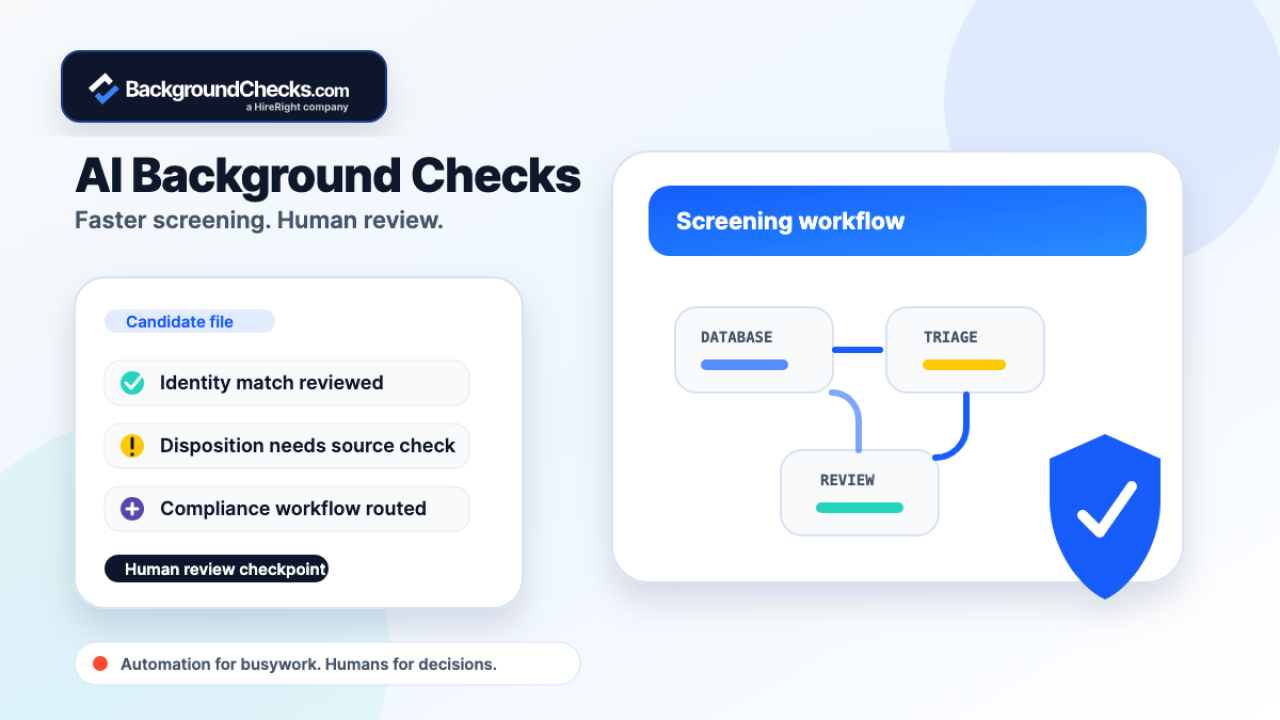
AI in Background Screening: Faster Hires Without the Compliance Risk
Choosing a Background Check Provider for Staffing Agencies
Client-Ready Screening Program For Staffing Firms
HireRight vs. BackgroundChecks.com: Which Background Screening Platform Fits Your Business?
Warehouse Staffing Background Checks: Package the Assignment, Not the Person
Warehouse Staffing Background Checks: Package the Assignment, Not the Person
The client needs 12 people on the floor Friday. Three are pickers. Two will run a sit-down forklift. One will move trailers in the yard. The rest are overflow from last week's no-shows.
If your recruiter builds one order and copies it 12 times, you will either over-screen people the client never asked you to hold, or you will send a yard driver without the motor vehicle search the client put in the contract. Both mistakes cost the same thing: a start date.
Warehouse and industrial staffing is not a generic HR background check problem. It is an assignment problem. The package has to follow the work, the site, and the client file, not the recruiter's habit.
This is the operator layer on top of a client-ready screening program for staffing firms. QSR already has its own 2026 playbook. Home services is a different risk shape. Warehouse and light industrial is the volume book that still gets treated like "just run the usual."
Start with the assignment file, not the candidate
Before you send an invite, write four facts on the req. If you cannot fill them, you are not ready to order.
What does the person actually do on site (picker, packer, forklift, inventory, yard, delivery, lead)?
What did this client put in writing for this role, not for the account in general?
Which searches are already in your standard package, and which are add-ons for this site?
What start date did someone already promise, and has the candidate even opened the application?
You only need the applicant's email to start an order. The rest of the PII lives in the application they complete. That is useful at volume. It is also why a Friday start dies when the invite sits unopened until Thursday night.
If two clients share the same building but not the same contract, do not reuse Client A's package on Client B's people. That is how you get a consider result you cannot explain, or a gap the client finds after the person is already on the floor.
A working matrix (not a legal list)
This matrix is a recruiter worksheet. It is not a required screen for warehouse work, and it is not legal advice. Client contracts, site rules, and local law decide the real package. Use it to stop defaulting every temp to the same cart.
Picker, packer, sorter, returns. Most clients want a criminal screen that includes a national search plus county court records where the person has lived. A national database is a wide net. A county criminal search is the courthouse file. They are not substitutes. If the client only asked for "a background check," write back and name the components before you order.
Forklift or powered industrial truck on a closed site. Start from the same criminal package the client uses for the floor. Add only what the client file actually requires. Do not invent a license check you cannot run, and do not call a warehouse forklift a DOT driving job. If the client wants a drug screen for this site, order drug testing as its own line, not as a hope that the criminal report covers it.
Yard jockey, shuttle, or any assignment that puts the person on a public road. This is where motor vehicle records belong, when the client requires them. MVR is not a criminal search. It is license status, class, and violations. If the person will not drive, do not add it to look thorough.
Lead, inventory control, or anyone the client treats as a keyholder. Some clients add employment verification because the contract asks for job title and dates. That is a client requirement, not a default. If you add it, tell the recruiter the clock may follow the prior employer, not the courthouse.
Healthcare-adjacent warehouse (pharmacy DC, medical device, hospital dock). Do not upgrade the package from memory. Pull the client file. Some sites add watchlist or exclusion language. Some do not. If the written requirement is unclear, stop and get it in writing before you send 12 invites.
Keep the same package for the same assignment. Tuesday's picker and Thursday's picker for the same client should not get two different carts because a recruiter was in a hurry.
Tell the client the clock before you promise Friday
Screening does not start when you click order. It starts when the candidate submits the application. Say that out loud on the req call.
Published clocks you can use without guessing:
SSN trace, national criminal, national sex offender, watchlists, and federal criminal searches typically return the same day after the application is in.
County criminal searches in immediate-access courts often return within 24 hours. Clerk-assisted courts take 3 to 5 business days. Courthouses are closed weekends and holidays.
Motor vehicle records typically return the same day, except Utah, Washington, and Pennsylvania, which have extra documentation.
Employment verification can return the same day if payroll information is provided on the application. Otherwise it averages 1 to 3 business days.
Drug tests (5, 9, and 10 panel) typically return 1 to 2 days after collection. A Medical Review Officer review adds time. There is no preliminary result to leak to the client.
A typical package that mixes database searches and a county file often lands in the 1 to 3 business day range. That is a range, not a promise.
If someone already told the client "they'll be there Friday" on a Wednesday afternoon, and the assignment needs a clerk-assisted county search, you do not have a screening problem. You have a promise problem. Fix the start date before you send the invite.
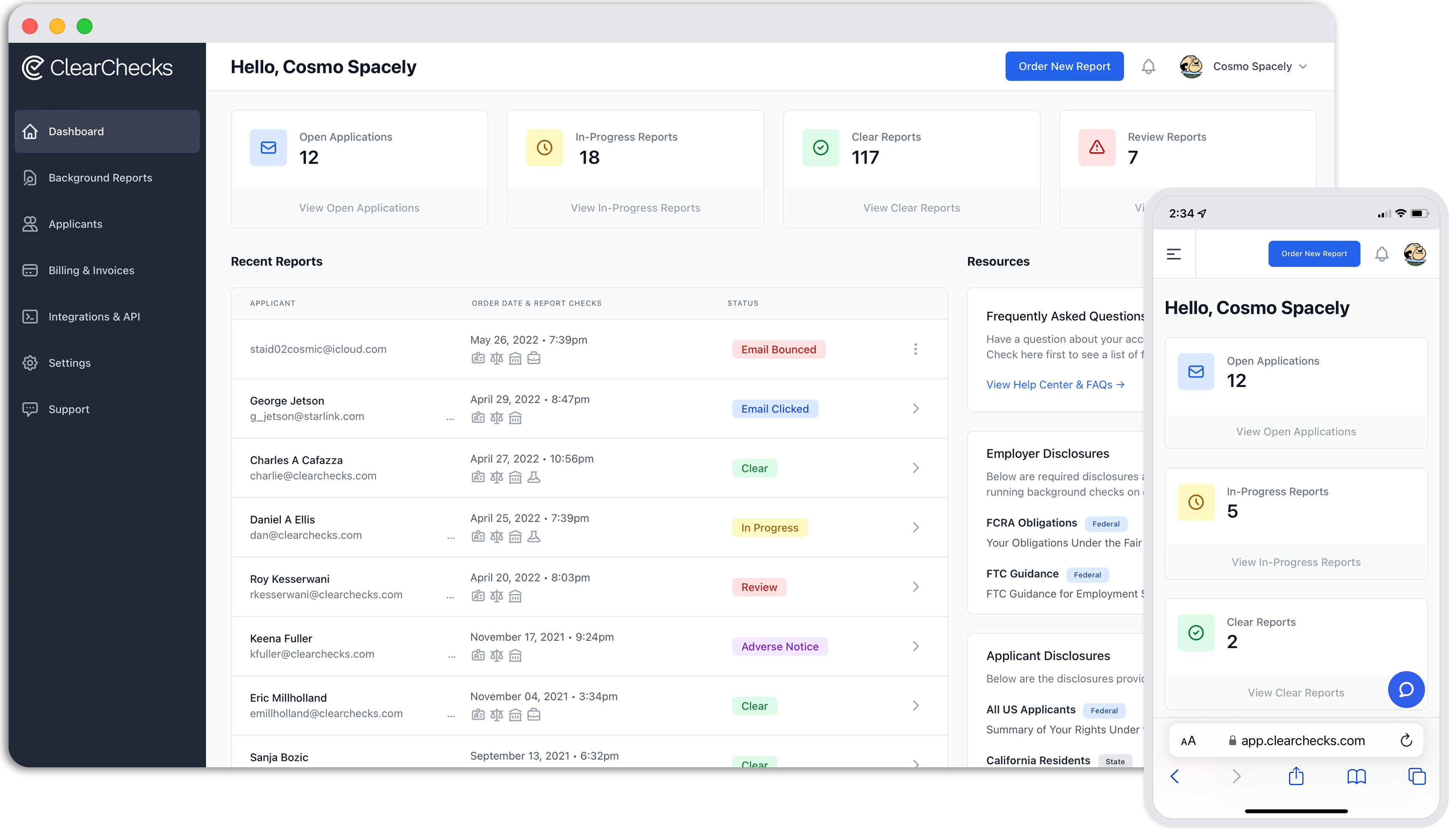
For the recruiter dashboard language, use the live status definitions. In progress is not a consider result. A consider result is not a no.
Drug testing is a separate order, and DOT is a hard no
Warehouse clients ask for drug screens constantly. That does not make every screen the same product.
BackgroundChecks.com runs 5, 9, and 10 panel tests through nationwide walk-in labs. The candidate gets a registration email, shows ID, and the clock starts at collection, not at the invite.
Drug tests here are not DOT-compliant. If the client says DOT, FMCSA, or a regulated driving program, do not sell around it. Tell them that product is not offered. Same rule for I-9 and E-Verify: BackgroundChecks.com does not offer them. Do not put either one on a warehouse onboarding checklist you send out under this brand.
Compliance stays in the existing workflow
Warehouse volume is how staffing firms skip a step. Do not write new consent language in Slack to "keep it moving."
Employment-purpose screening still needs a standalone disclosure and written authorization before the report is pulled. Applicants complete those in the application. The Help Center lists what disclosures applicants sign. If a record may change the start date, follow the process you already use for pre-adverse and final adverse action. Do not invent a warehouse exception.
The 2026 FCRA checklist is the employer-side map. The EEOC's guidance on arrest and conviction records is the reminder that a record is not an automatic no, and that you apply the same screen to the same assignment.
If you staff the same role across several cities, local fair-chance rules can add timing or forms. That is a counsel question, not a recruiter improvisation.
What this looks like on a real Monday
A 200-person light-industrial desk is not choosing a vendor from a demo. They are filling a building that called at 7:10.
Build three saved packages for that client: floor, powered equipment, driving. Name them in the client file. Train every recruiter to pick from those three instead of rebuilding the cart. When a new site is added, add a fourth package or write the exception. Do not whisper it.
Order from an account that already exists. BackgroundChecks.com is used by over 100,000 companies, with pay-as-you-go checkout and no setup fee, monthly fee, or minimum. Pricing starts at $29.99 per check. County-level court fees and certain third-party pass-through costs may apply depending on the jurisdiction and service type. Current packages are Basic $29.99, Complete $44.99, and Professional $76.99. If the client required county court records, confirm those searches are on the order before you send the invite. Do not assume a cheaper package covers them.
Independent read of the product: the TechRadar BackgroundChecks.com review.
When a report stalls, you need a person, not another status email. That is the staffing difference. The floor does not wait for a portal ticket.
Get Started Now
If you place warehouse or industrial people every week, stop copying last Tuesday's order. Build the assignment packages, put the clocks on the req, and order the first one today.
Create an account. Or start from the staffing and recruiting agencies page if you want the industry workflow first.
FAQ
What background checks do warehouse staffing agencies usually run?
Most warehouse and industrial clients ask for a criminal screen that pairs a national database search with county court records for the places the candidate has lived. Some sites add drug testing. Assignments that put a person on a public road may add a motor vehicle record. None of that is automatic. The client file and the assignment decide the cart.
How long does a warehouse staffing background check take?
The report cannot start until the candidate submits the application. Database searches often return the same day. County searches in immediate-access courts often return within 24 hours. Clerk-assisted counties take 3 to 5 business days. Drug tests typically take 1 to 2 days after collection. Do not promise a Friday start on a Wednesday if a clerk-assisted county search is in the package.
Do warehouse temps need a different package than office or QSR placements?
Often, yes, because the work and the client contract are different. A picker is not a cashier, and a yard driver is not a picker. Use a role-based matrix so similar assignments get the same screen. Do not copy a QSR package onto a distribution center req.
Can I run a DOT drug test through BackgroundChecks.com for a warehouse driving assignment?
No. BackgroundChecks.com does not offer DOT-compliant drug testing, and it does not offer I-9 or E-Verify. If the client needs a regulated driving program, say so early and do not substitute a standard 5, 9, or 10 panel as if it were the same product.